


Olive Jade vs Jade: What's the Difference and Which Is Right for You?
, by Karmasoul, 7 min reading time
, by Karmasoul, 7 min reading time
For thousands of years, jade has been revered across the globe as a stone of supreme status, spiritual protection, and timeless beauty. However, when stepping into the modern wellness and jewelry spaces, many people encounter a beautifully unique variety known as "Olive Jade" and find themselves asking: How does this earthy gemstone compare to traditional jade? Is it real jade? And which one resonates best with my daily lifestyle? While both stones share a rich aesthetic lineage, they possess distinct geological origins, physical traits, and spiritual frequencies. Let’s dive deep into the ultimate breakdown of olive jade vs jade to help you choose the perfect daily anchor for your journey.
For thousands of years, jade has been revered across the globe as a stone of supreme status, spiritual protection, and timeless beauty. However, when stepping into the modern wellness and jewelry spaces, many people encounter a beautifully unique variety known as "Olive Jade" and find themselves asking: How does this earthy gemstone compare to traditional jade? Is it real jade? And which one resonates best with my daily lifestyle?
While both stones share a rich aesthetic lineage, they possess distinct geological origins, physical traits, and spiritual frequencies. Let’s dive deep into the ultimate breakdown of olive jade vs jade to help you choose the perfect daily anchor for your journey.
If you are wondering what is olive jade, it is an organic, earthy gemstone that has captured the attention of the modern mindfulness community.
Geologically, most of what is beautifully referred to in the intentional jewelry market as "Olive Jade" is a premium variety of Serpentine or a unique combination of minerals that mimic the velvet texture of historic jade. It is birthed from metamorphic rocks deep within the earth's crust, where intense pressure combines magnesium and silicate minerals into a rich, dense structure.
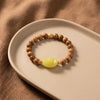
True to its name, Olive Jade features an exquisite spectrum of olive greens, warm mossy undertones, and soft translucent veins. It moves away from the stark, cold brightness of corporate luxury, offering a rich, comforting tone that mirrors the forest floor. In 2026, it has become incredibly sought-after as an olive jade bracelet choice because it perfectly matches the rise of intentional living, natural palettes, and organic street-style jewelry.
Traditional jade, on the other hand, is a cultural powerhouse that has dominated Eastern history and heritage luxury for millennia.
When gemologists speak of traditional jade, they are referring to two entirely distinct minerals:
Historically, traditional jade was treated as a sacred heirloom passed down through generations, symbolizing cosmic authority, familial heritage, and eternal protection.
| Feature | Olive Jade | Traditional Jade |
|---|---|---|
| Color | Warm olive, moss green, earthy undertones | Imperial green, spinach green, creamy white |
| Hardness | 4 to 5.5 (Mohs Scale) | 6 to 7 (Mohs Scale) |
| Transparency | Translucent to Opaque (Velvety glow) | Translucent to Semi-Transparent (Glassy shine) |
| Mineral | Serpentine / Magnesium Silicate | Jadeite or Nephrite |
| Origin | Peru, North America, Global | Myanmar, China, Russia, New Zealand |
| Price | Accessible, sustainable everyday luxury | Highly expensive, collector-grade investments |
| Symbolism | Mindfulness, emotional grounding, nature | Heritage, ancestral protection, longevity |
| Jewelry Style | Modern bracelets, raw talismans, daily beads | High-end carvings, traditional bangles, fine rings |
The most immediate contrast when examining olive jade vs jade is the visual warmth. Traditional jade often leans toward a cool, crisp emerald tone or a jag-white finish. Olive Jade, however, holds an undeniable warmth—its matrix often includes delicate, darker swirls of earth iron that give each bead an entirely unique signature.
Traditional jade behaves like glass under light, bouncing rays off its polished surface with a sharp, reflective gleam. Olive Jade has a much softer, waxier, or satin-like luster. It doesn't scream for attention from across a crowded room. Instead, it offers a private, velvety aesthetic that blends seamlessly into casual, modern wardrobes.
On the Mohs Hardness Scale, traditional jade hits a solid 6 to 7, making it highly scratch-resistant. Olive Jade sits slightly lower, typically between 4 and 5.5. This means while it holds a satisfying physical weight and density, it is softer than traditional nephrite.
Because Olive Jade is a gentler mineral, it requires a touch of mindful care. It is highly resilient against daily movement, but an olive jade bracelet should be shielded from harsh chemical cleaners, industrial perfumes, or direct impacts against metal surfaces to preserve its natural, satin finish.
Both stones serve as beautiful instruments for personal intention, but they speak to different parts of the soul:
Neither stone is superior; it entirely depends on your soul's current alignment.
In the commercial gemstone world, "Olive Jade" is a descriptive trade name used for premium green Serpentine that shares the identical velvety texture, soothing weight, and aesthetic properties of historic jadeite. While scientifically distinct in mineral grouping, it has been carried as a sacred protective talisman across cultures for centuries.
No, and that is one of its greatest gifts. Unlike high-quality traditional jade, which can cost thousands of dollars due to scarcity and collector speculation, Olive Jade remains incredibly accessible. It allows you to own a genuine, raw piece of earth energy as a daily accessory without paying a corporate luxury markup.
Yes, absolutely. Millions of people wear an olive jade bracelet as a permanent second skin. Just remember to slip it off before heavy weightlifting, swimming in chlorine pools, or applying intense chemical lotions to keep the natural mineral matrix vibrant.
Both stones can easily last a lifetime if respected. Traditional jade is less prone to superficial scratches due to its higher mineral hardness, but Olive Jade carries exceptional structural toughness, meaning it won't easily crack or shatter if accidentally bumped against a desk during your workday.
Ready to find your natural anchor? Explore our signature Balance Collection featuring genuine Olive Jade pieces crafted for emotional grounding, or shield your aura with our protective Protection Collection.